
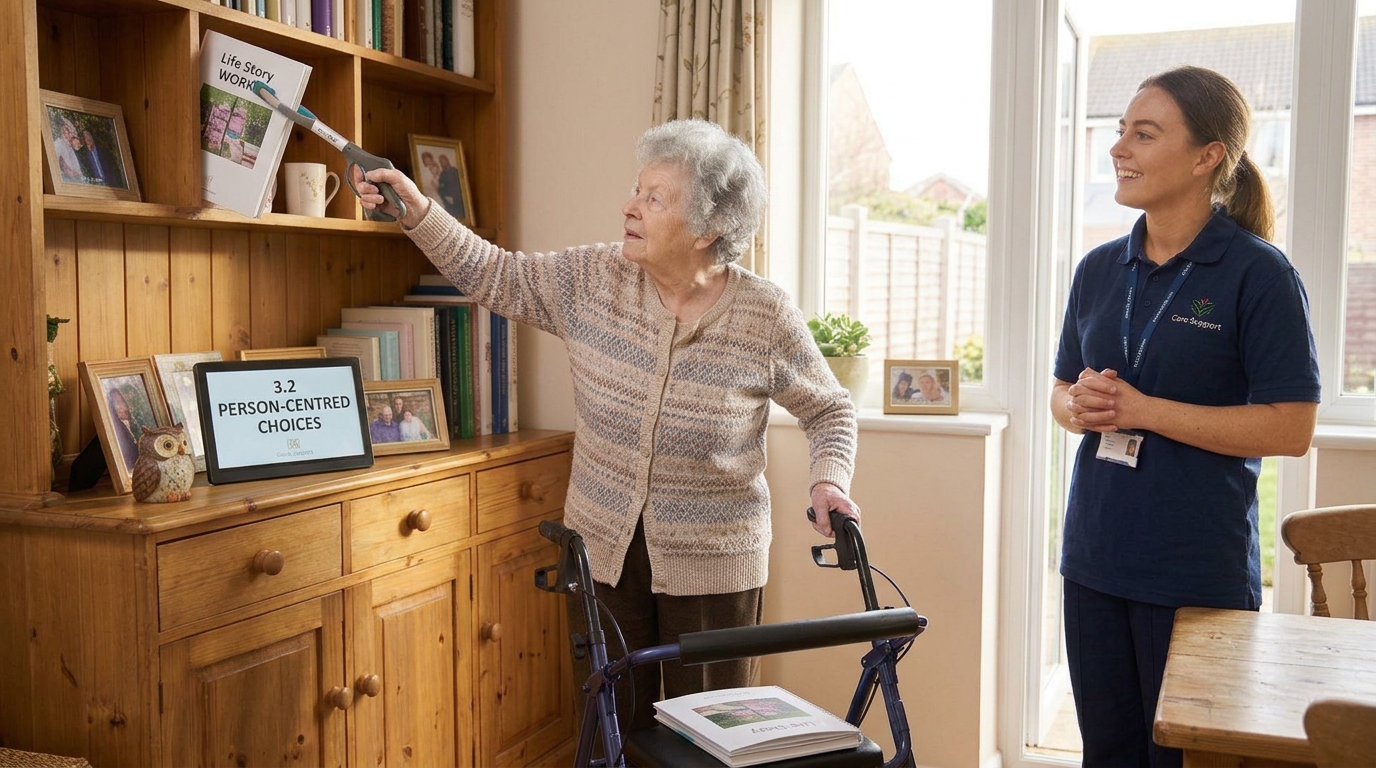
What Is a Person-Centred Approach?
A person-centred approach means working in a way that focuses on the older person’s own needs, wishes, preferences and goals. It respects them as an individual with rights, choices and a lifetime of experience.
It means:
- Listening carefully and avoiding assumptions
- Involving the person in every decision about their care
- Adapting support to their specific circumstances
- Treating them as the expert on their own life
In practice, this approach helps older people maintain physical health, mental wellbeing, independence and dignity in everyday life.
The Legal and Ethical Backbone
| Law / Framework | How it supports a person-centred approach |
| Care Act 2014 | Wellbeing principle; person-centred assessment and care planning |
| Mental Capacity Act 2005 | Presumes capacity; supports informed choice and unwise decisions |
| Human Rights Act 1998 | Article 8 protects private life, autonomy and dignity |
| Equality Act 2010 | Prevents discrimination based on age, disability or belief |
| CQC Regulation 9 | Requires person-centred care that meets individual needs and preferences |
| NICE Guideline SC1 | Supports independence, choice and wellbeing for older people |
Key point: Person-centred care is not optional. It is a legal duty under the Care Act 2014 and a CQC inspection requirement.
Ways to Use a Person-Centred Approach — Practical Guide
1. Understand the Person
To support someone well, you must learn who they are. This includes:
- Daily routines that matter to them
- Foods they enjoy and any dietary needs
- Interests, hobbies and social activities
- Religious or cultural practices
- Communication preferences
- Family and friendship networks
- Life history and important memories
Gather this information through conversations, life story work, observation, and working with family or carers. Taking time to understand the person builds trust and helps you support activities that genuinely matter to them.
2. Promote Choice and Control
Older people can lose confidence when decisions are made for them. Giving choice in day-to-day matters builds self-esteem and reduces dependency.
Practical examples:
- Offering different meal options and letting them decide
- Giving choice about which activities they take part in
- Asking if they want to go outside or stay indoors
- Giving control over the timing of personal care
- Letting them choose their own clothing
Even small choices protect identity and independence.
3. Encourage Physical Activity
Physical health is directly linked to wellbeing. Even small amounts of daily movement improve mobility, circulation, mood and energy.
Match the activity to the person’s abilities and preferences:
- Walking in the garden or local area
- Gentle chair exercises
- Dancing to favourite music
- Stretching routines
- Group exercise classes for older adults
Encouraging activity the person enjoys keeps muscle strength, flexibility and balance — and reduces the risk of falls.
4. Support Healthy Eating
Nutrition is central to health and wellbeing. Older people may face reduced appetite, chewing or swallowing difficulties, or medical diets. A person-centred approach respects their food preferences and adapts meals to their needs.
Ways to support healthy eating:
- Talk with them about favourite meals and snacks
- Present meals attractively
- Offer smaller portions more often
- Encourage drinks throughout the day
- Involve them in meal preparation if they wish
A balanced diet and good hydration support energy, immunity, cognitive function and comfort.
5. Maintain Social Connections
Loneliness harms both mental and physical health. A person-centred approach helps older people keep contact with family, friends and community groups.
Social engagement could include:
- Group activities in residential settings
- Attending community events
- Religious or faith gatherings
- Club memberships and hobby groups
- Visiting neighbours and friends
- Video calls if travel is difficult
Giving the person choice about who they spend time with and what they join helps them stay emotionally healthy.
6. Support Emotional Wellbeing
Mental health is as important as physical health. Support emotional wellbeing in a way that matches the person’s own coping style.
Practical steps:
- Listen without judgement
- Offer space to share worries or memories
- Encourage activities that bring joy
- Respect times when they need quiet or privacy
- Help them access counselling or support groups if they wish
This reduces the risk of depression and anxiety and helps maintain a positive outlook.
7. Respect Cultural and Religious Needs
Older people may have cultural or religious practices that are central to their wellbeing. Learn about these and integrate them into daily support.
Examples:
- Providing meals that fit religious dietary rules
- Allowing time for prayer or spiritual activities
- Recognising and celebrating important cultural dates
- Supporting attendance at places of worship
- Respecting gender preferences for personal care
This respect creates a sense of belonging and reinforces dignity.
8. Support Personal Care with Dignity
Personal care is sensitive. A person-centred approach delivers support in a way that protects privacy, comfort and dignity.
Ways to do this:
- Ask for consent before starting any care activity
- Give the person choice about who provides their care
- Work at their pace
- Maintain privacy with screens or closed doors
- Be respectful and reassuring throughout
This helps older people feel safe and respected, reducing anxiety around care routines.
9. Adapt Support as Needs Change
As people age, needs may change through illness, disability or recovery. A person-centred approach reviews and adapts care to match new circumstances — without removing independence unnecessarily.
Adaptations can include:
- Introducing mobility aids
- Adjusting daily routines
- Offering extra support for personal care
- Changing meal plans if appetite changes
- Increasing or reducing activity based on health
Regular communication ensures changes are agreed with the older person and reflect their wishes.
10. Work with the Person’s Support Network
Family, friends and carers often play a significant role. A person-centred approach values their input while keeping the older person’s voice central.
This may involve:
- Sharing relevant information with consent
- Encouraging them to join activities
- Listening to their observations about the person’s needs
- Including them in care planning meetings
Teamwork creates consistent support based on what matters to the older person.
11. Use Personalised Care Plans
A care plan records the person’s needs, preferences and goals. In a person-centred approach, the plan is developed with the older person’s input.
Effective care plans:
- Include physical, mental, social and cultural needs
- Identify strengths and abilities, not only challenges
- Set achievable goals
- Are reviewed regularly with the person’s involvement
This keeps support relevant and empowering.
12. Support Independence in Daily Activities
Independence builds self-worth and confidence. Support older people to carry out daily activities as much as possible for themselves, offering help where needed.
Examples:
- Assisting with cooking rather than doing it all for them
- Encouraging them to dress themselves with minimal help
- Supporting them to manage their own medication if safe
- Helping them organise their own social calendar
This balance helps them feel capable and involved in their own life.
13. Encourage Meaningful Activities
Activities should be meaningful to the person — not just convenient for staff. Meaningful activities reflect the person’s interests and past experiences.
Examples:
- Gardening for someone who has always loved plants
- Playing music or singing if they enjoyed these before
- Reading together or supporting access to books
- Arts and crafts related to their hobbies
- Volunteering or contributing skills to community projects
Purpose supports emotional and mental wellbeing.
14. Communicate and Listen
Communication is central to a person-centred approach. Use the method that best suits the older person — speech, gestures, hearing aids, written notes, or an interpreter.
Key points:
- Listen actively and show respect for what they say
- Adapt your communication style to their needs
- Avoid rushing or interrupting
- Check understanding by repeating or clarifying
- Maintain eye contact where comfortable
Good communication builds trust and helps the person feel included in their own care.
15. Support Self-Management of Health
Self-management means enabling older people to take responsibility for aspects of their health. This improves control and adherence to treatment.
Ways to support self-management:
- Help them monitor blood pressure or blood sugar
- Encourage them to keep a record of medications
- Involve them in setting health goals
- Give clear information about treatment plans
This respects their abilities and keeps them engaged in their own health.
16. Manage Risk Positively
Risk is part of life. A person-centred approach manages risk in a way that allows older people to continue valued activities.
Positive risk management involves:
- Assessing the risk with the person
- Talking about possible outcomes
- Finding ways to reduce risk without removing all choice
- Respecting their decision if they understand the risk
This focuses on enabling rather than restricting — in line with the Mental Capacity Act 2005.
A Person-Centred Example (Use This in Your Diploma)
Scenario: Mr Ahmed, 81, has type 2 diabetes and mild arthritis. He lives alone and receives home care twice a day.
Person-centred support in practice:
- His care worker learns he enjoys cooking but struggles with chopping vegetables
- She provides adapted utensils and a perching stool so he can keep cooking
- His meal plan reflects his cultural and religious dietary preferences
- He chooses his own bedtimes and when personal care happens
- He is supported to keep his weekly mosque visit and see his grandson
- His care plan is reviewed every month with his input
- Risks — such as falls in the kitchen — are assessed and managed, not used to stop him cooking
Outcome: Mr Ahmed stays active, eats well, keeps his faith and family connections, and stays in control of his daily life. His health and wellbeing improve.
Common Mistakes to Avoid
- Making decisions for the person without consulting them
- Offering one option and calling it choice
- Focusing only on physical needs and ignoring emotional or cultural ones
- Rushing personal care
- Ignoring family input or, conversely, letting family override the person’s wishes
- Assuming someone lacks capacity because of age or diagnosis
- Failing to review the care plan as needs change
- Treating risk as something to eliminate rather than manage
Key Takeaways for Your Diploma
- Person-centred means the older person is at the centre of every decision
- It is a legal duty under the Care Act 2014 and required by CQC Regulation 9
- Learn the person’s history, preferences, culture and faith
- Promote choice and control in daily life
- Support physical, mental, social and emotional wellbeing
- Adapt support as needs change, without removing independence
- Manage risk positively, in line with the Mental Capacity Act 2005
- Document the person’s wishes and review regularly
Frequently Asked Questions
It means planning and delivering care around the individual’s own needs, wishes, preferences and goals — treating them as the expert on their own life.
Because it protects dignity, independence and wellbeing. It reduces the risk of depression, loss of skills and over-protection, and improves quality of life.
The Care Act 2014 (wellbeing principle), the Mental Capacity Act 2005, the Human Rights Act 1998, the Equality Act 2010 and CQC Regulation 9.
By promoting choice, learning the person’s history and preferences, adapting support, respecting culture and faith, communicating well, and managing risk positively.
Task-focused care prioritises getting jobs done. Person-centred care prioritises the person’s experience, wishes and wellbeing — even if tasks take longer.
Follow the Mental Capacity Act 2005: presume capacity, take all reasonable steps to help them decide, and if they lack capacity for a specific decision, make a best-interest decision involving family or advocates.
Yes. Residents can still choose meals, bedtimes, clothing, activities and room decoration. Routines should be built around personal choice, not staff convenience.