
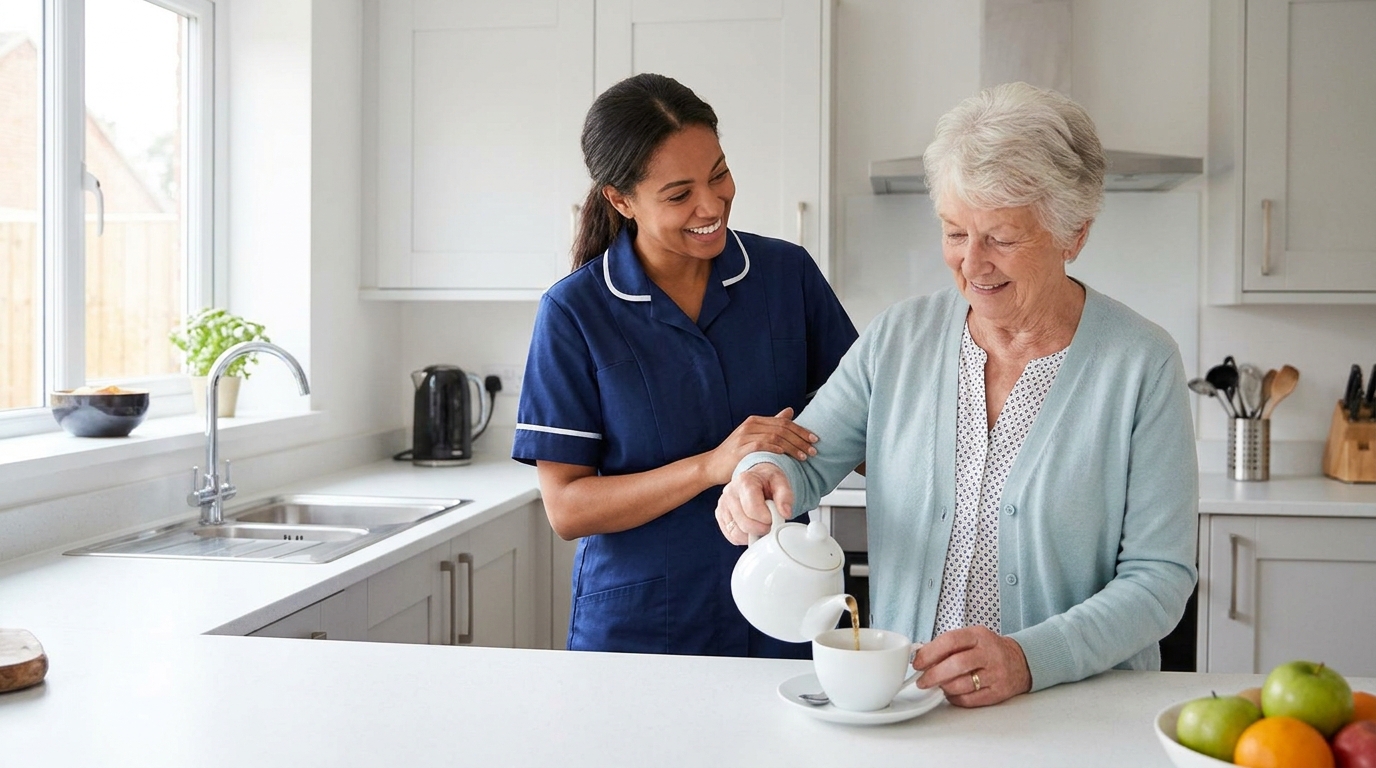
What Does Independence Mean for Older People?
Independence does not mean living alone or doing everything without help. It means having control over decisions and daily life, and being treated as an adult with your own preferences.
Independence can include:
- Making choices about daily routines
- Managing personal care with or without aids
- Keeping up hobbies, work or volunteering
- Deciding who to spend time with
- Handling money and personal affairs
- Choosing where and how to live
Levels of independence vary between individuals. Some older people live fully independently; others need support with certain tasks but still feel in control. Both can experience the well-being benefits of independence.
How Independence Links to Well-Being
Well-being is more than physical health. It covers:
- Emotional well-being — feeling valued, calm and in control
- Physical well-being — staying mobile, active and healthy
- Mental well-being — keeping the mind active and confident
- Social well-being — staying connected and included
- Financial well-being — having control over money and choices
Independence supports every one of these areas. When older people have control, they feel more valued and engaged in life. When independence is lost, frustration, helplessness and depression often follow.
Under the Care Act 2014, the wellbeing principle requires care and support to promote the individual’s wellbeing — including their control over their own life.
Emotional Benefits of Independence
Independence gives older people a sense of purpose and identity. Simple choices — what to wear, when to go for a walk, what to eat — reinforce that they are still in charge of their own life.
Emotional benefits include:
- Greater self-respect and confidence
- Reduced anxiety and fear of being a burden
- Less frustration and helplessness
- A stronger sense of identity and value
- More positive outlook on life
When someone manages their own tasks, schedule or finances, they feel competent. That feeling protects mental health.
Physical Benefits of Independence
Physical independence naturally leads to more movement. An older person who walks to the shop, tends the garden or cooks their own meals is exercising without thinking of it as exercise.
Physical benefits include:
- Maintained muscle strength and balance
- Better joint health and reduced stiffness
- Improved circulation
- Better management of chronic conditions
- Improved hygiene and lower risk of illness
When personal care — bathing, dressing, managing medication — is done by the person themselves, health outcomes improve.
Mental Benefits of Independence
Independence keeps the mind active. Decision-making, planning and problem-solving all exercise cognitive skills.
Mental benefits include:
- Sharper memory and thinking
- Greater confidence in own abilities
- Slower cognitive decline
- Continued learning and curiosity
- A sense of achievement from daily tasks
Activities like reading, puzzles, hobbies and volunteering all strengthen mental well-being — and independence is what makes them possible.
Social Benefits of Independence
Independence encourages older people to stay socially connected. They can choose their own companions, activities and social calendar.
Social benefits include:
- Reduced loneliness and isolation
- Stronger friendships and family ties
- More participation in community life
- A sense of belonging and purpose
- Better emotional resilience
Social independence means the person chooses who to see and when — not having social contact arranged for them.
Financial Independence
Control over money is a key part of well-being. Financial independence gives older people the freedom to:
- Buy items for personal enjoyment
- Support causes they care about
- Plan trips or events
- Maintain privacy and dignity
Financial independence reduces stress by avoiding over-reliance on others. It also protects against financial abuse, because the person stays in control of their own affairs.
The Workplace Role in Supporting Independence
Health and social care workers strengthen independence by:
- Encouraging choice in meals, clothing and daily activities
- Supporting physical tasks without taking control unnecessarily
- Providing information so older people can make informed decisions
- Respecting personal preferences and routines
- Offering adaptive equipment to make tasks easier
- Using enabling language rather than directive language
Communication is key. Always ask what the person wants rather than assuming.
Risks of Reduced Independence
When independence is reduced, quality of life drops. Risks include:
- Loss of self-esteem and confidence
- Withdrawal from social contact
- Increased risk of depression
- Reduced physical activity and health decline
- Growing dependency on carers
- Feelings of being excluded or powerless
- Loss of decision-making skills
Over-protection — removing choice in the name of safety — can cause as much harm as neglect.
Balancing Support and Independence
Support should enable independence, not replace it. Workers should help older people do tasks themselves where possible — assisting with difficult parts while letting them complete easier parts.
Balancing involves:
- Assessing what the person can do alone
- Offering help only if needed
- Using aids like walking sticks or adapted cutlery
- Checking progress regularly
- Adjusting support over time
This prevents over-reliance and keeps skills alive.
Independence in Daily Living
Daily living includes cooking, cleaning, self-care, travel and hobbies. Independence in these areas can be maintained by:
- Keeping mobility aids within easy reach
- Adjusting homes for safety and accessibility
- Offering training on technology for communication and shopping
- Encouraging participation in home tasks rather than doing them all
Small changes make a big difference. For example, rearranging a kitchen so commonly used items are easy to reach.
Respecting Dignity
Independence promotes dignity. Older people feel respected when others listen to their views and give them time to decide.
Workers should:
- Avoid rushing tasks without consulting the person
- Ask before helping
- Give privacy during personal care
- Acknowledge the person’s experience and preferences
Respectful interaction maintains trust and supports well-being.
Example Scenarios
Scenario 1: An older woman chooses her weekly food shop online with help from her carer. She decides on meals based on her preferences — maintaining control over her diet and budget.
Scenario 2: An older man uses a personal alarm and grab rails to walk to his garden daily, maintaining physical activity and enjoyment while managing risk.
Scenario 3: An older couple plan their own daily routine with flexibility, adjusting when they wish to rest or go out — keeping autonomy over their time.
These scenarios show that independence can be supported without removing safety or assistance.
Encouraging Independence Through Technology
Technology can help older people live independently. Examples include:
- Video calls for social contact
- Online banking for managing finances
- Grocery delivery services
- Personal alarms for safety
- Medication reminders
- Voice-controlled home devices
Workers can assist with learning these tools, giving older people more control over their lives.
Psychological Impact
Feeling independent boosts confidence. This creates a positive cycle: confidence leads to more activity, which improves health and mood.
When independence is taken away, mental health suffers. People can feel isolated, undervalued or invisible. Protecting independence is therefore a form of mental health support.
Independence and Choice
Choice is central to independence. Workers should offer genuine options — not a single option dressed up as a choice.
For example:
- “Would you like to go for a walk or stay in?” instead of deciding for them
- “Which of these three meals would you prefer?” instead of “Here’s your lunch”
Choice allows older people to express individuality and maintain identity.
Independence and Safety
Safety measures should not restrict independence unnecessarily. Risk assessments should find ways to enable activities, not stop them.
For example, a person at risk of falling might still walk short distances with a walker — rather than being confined to a chair “for their own safety”.
This balance is supported by the Mental Capacity Act 2005, which upholds the right to make unwise decisions.
Training Staff to Support Independence
Staff should be trained to:
- Promote choice
- Avoid unnecessary intervention
- Use enabling language
- Provide supportive equipment
- Respect personal boundaries
- Understand the legal duties under the Care Act 2014 and Mental Capacity Act 2005
Training ensures independence is encouraged consistently across all areas of care.
Supporting Gradual Independence
Some older people regain independence after illness or injury. Gradual steps help:
- Start with small tasks
- Build confidence with praise
- Give clear instructions
- Be patient with setbacks
- Celebrate progress
Positive encouragement and patience are essential to this process.
Measuring Well-Being
Workers can observe changes in:
- Mood and emotional state
- Activity levels
- Social engagement
- Appetite and sleep
- Participation in hobbies
Asking older people directly about their satisfaction gives the most useful insight. Increased smiles, laughter and participation are signs that independence is improving well-being.
Maintaining Independence in Care Settings
In residential or hospital settings, independence can be supported by:
- Letting residents choose meals, bedtimes or clothing
- Offering participation in group activities
- Allowing personal decoration of rooms
- Respecting privacy and alone time
- Involving residents in care plan reviews
Care settings should plan routines that give space for personal choice — not just efficiency for staff.
Common Mistakes to Avoid
- Assuming an older person cannot decide for themselves
- Doing tasks for the person because it is quicker
- Removing independence in the name of safety
- Offering only one option and calling it choice
- Ignoring cultural or religious preferences
- Failing to review the support plan as needs change
- Treating older people as passive recipients of care
Key Takeaways for Your Diploma
- Independence means control and choice, not doing everything alone
- It supports emotional, physical, mental, social and financial well-being
- The Care Act 2014 makes promoting well-being and independence a legal duty
- Workers enable independence through choice, communication and adaptive support
- Over-protection damages well-being as much as neglect
- Independence can be supported in any setting, including care homes and hospitals
- Always document the person’s wishes and review regularly
Frequently Asked Questions
Independence gives older people control over their lives, which protects dignity, confidence and purpose. It improves emotional, physical, mental, social and financial well-being.
It means having control over decisions and daily life — not doing everything alone. Support can be in place while the person stays in charge.
The Care Act 2014 (wellbeing principle), the Mental Capacity Act 2005, the Human Rights Act 1998 and CQC Regulation 9 all support independence and well-being.
Quality of life drops. Risks include loss of self-esteem, social withdrawal, depression, physical decline and increased dependency.
By promoting choice, adapting the environment, encouraging activity, using assistive technology, respecting the person’s pace, and balancing support carefully.
Yes. Residents can still choose meals, bedtimes, clothing, activities and room decoration. Care settings should build routines around personal choice.
Independence builds confidence and purpose, which protects against anxiety, depression and helplessness. Loss of independence often leads to poor mental health.